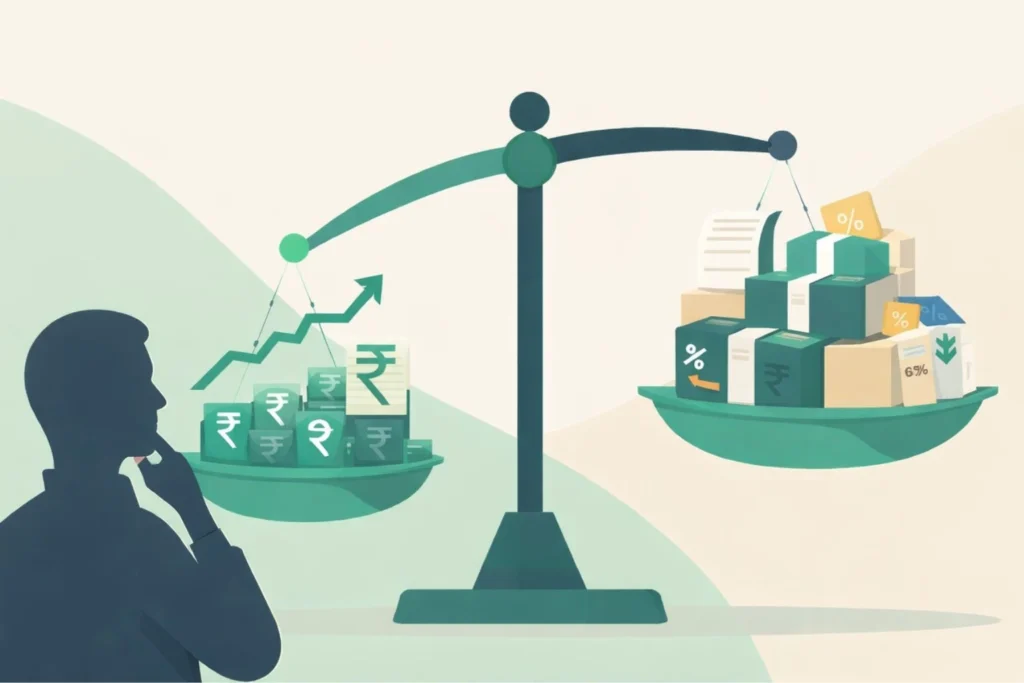
Many beginner sellers believe that if a product is not selling, the price must be too high.
The logic feels simple. Lower the price, attract more buyers, and increase sales. Because of this, price reduction often becomes the first strategy sellers try when a listing is not performing well.
However, many people notice something unexpected after doing this. The price drops, but sales do not increase the way they expected. Sometimes the product continues to struggle even after multiple price reductions.
This is where confusion begins.
Over time, many sellers realise that customers rarely make decisions based only on the lowest price. Other factors quietly influence buying decisions long before price becomes important.
Understanding those factors is essential for anyone trying to increase sales without damaging profit margins.
The Common Belief: “Lower Price Means More Sales”
When people first start selling on online marketplaces, one idea appears almost everywhere. If a product is not selling, the price must be too high.
This belief feels logical, and it is repeated frequently in beginner discussions, seller forums, and many online guides. The advice usually sounds simple: reduce the price so customers will choose your product over competitors.
Because marketplaces display multiple sellers offering similar products, price comparison becomes very visible. New sellers often see competitors listing the same item for a slightly lower amount and assume that the cheaper listing must be getting all the orders.
As a result, many beginners start adjusting their prices frequently. If orders slow down, they reduce the price. If a competitor appears with a lower price, they reduce it again.
At first, this approach feels like a practical way to compete.
However, many sellers eventually notice that this strategy does not always produce the expected results. The price becomes lower, but the increase in orders either never appears or remains very small.
This is usually the stage where sellers begin questioning whether price is really the main reason customers are not buying.
Why Many Sellers Eventually Realise This Strategy Doesn’t Work
After some time on marketplaces, many sellers begin noticing patterns that challenge the original assumption about pricing.
At first, reducing the price may feel like the right move. A seller sees that competitors are offering similar products and assumes that being slightly cheaper will attract more buyers. In the early stages, this belief often leads to repeated price adjustments.
However, real marketplace behaviour rarely follows that simple logic.
Many sellers observe situations where a cheaper product still receives fewer orders than another listing with a higher price. This can feel confusing at first. If customers are comparing prices, why would they choose a more expensive option?
Over time, people begin to realise that the buying decision usually starts long before the price becomes important. Customers often evaluate other signals first, such as product images, ratings, number of reviews, delivery reliability, and overall listing credibility.
In many cases, a product that appears more trustworthy or more popular attracts more buyers even if it costs slightly more.
This is the stage where sellers begin to understand that lowering the price alone rarely solves the real problem. Instead of increasing sales, constant price reductions often hide deeper issues that affect how customers perceive the product.
Once sellers start noticing these patterns, the focus slowly shifts from simply lowering the price to understanding what actually influences buying decisions.
The Math Behind Price Cuts: Why More Orders Don’t Always Mean More Profit
One reason the “lower price = more sales” belief feels convincing is that it focuses only on order volume. If reducing the price brings more buyers, the strategy appears successful.
However, the underlying math often tells a very different story.
Every product has a limited margin after deducting product cost, marketplace fees, shipping charges, and packaging expenses. When the selling price is reduced, that margin immediately becomes smaller.
This creates a situation where the business must sell significantly more units just to maintain the same profit level.
Many beginners do not calculate this trade-off in advance. They assume that even a small increase in orders will compensate for the price reduction. In reality, the required increase in sales is often much larger than expected.
Over time, sellers sometimes notice that even though the number of orders has increased slightly, the overall profit continues to decline. This is the stage where the mathematical impact of price cuts becomes visible.
The Hidden Break-Even Trap Most Sellers Never Calculate
Many sellers look at price reductions only from the customer’s perspective. They assume that lowering the price will make the product more attractive and increase demand.
What often goes unnoticed is the break-even point created by that decision.
When the price drops, the profit per order becomes smaller. To recover the lost margin, the seller must sell far more units than before. In some cases, even a small price reduction requires a very large increase in sales just to reach the same profit level.
Without calculating this break-even point, sellers may feel that the strategy is working because orders appear to increase slightly, while the total profit quietly decreases.
Why Small Price Cuts Require Massive Sales Growth
The relationship between price and profit is rarely linear.
For example, if a product operates on a limited margin, even a modest price cut can remove a large portion of the profit from each order. To compensate for that lost margin, sales volume must increase dramatically.
In practice, achieving such a large increase in demand is extremely difficult. Customer behaviour does not always respond strongly to small price differences, especially when other factors such as reviews, ratings, and product presentation influence the decision.
Because of this, many sellers discover that small price cuts often produce only minor changes in demand while significantly reducing profitability.
Why Businesses Often Lose Profit Even When Sales Increase
In some situations, reducing the price does lead to a small increase in orders. However, this does not automatically mean the strategy is successful.
If the increase in sales volume is not large enough to compensate for the reduced margin per order, the overall profit can still decline.
This creates a misleading situation where the business appears to be growing in terms of orders, while the financial performance quietly weakens.
Many experienced sellers eventually realise that focusing only on order volume can hide the real impact of pricing decisions. Sustainable growth usually depends not just on selling more units, but on maintaining a healthy margin on every order.
Consumer Psychology: Why Lower Prices Sometimes Reduce Sales
Pricing decisions are not influenced only by numbers. Customer psychology plays a major role in how people evaluate products and decide what to buy.
Many beginners assume that customers always prefer the cheapest option available. In reality, buying decisions are often influenced by signals that help people judge quality, reliability, and value. Price is one of those signals.
Because of this, lowering the price does not always make a product more attractive. In some situations, it can even create doubt in the customer’s mind.
People often associate higher prices with better quality, while unusually low prices can sometimes raise questions about the product. This reaction may not always be conscious, but it strongly influences purchasing behaviour.
Understanding these psychological patterns helps explain why price reductions sometimes fail to increase sales.
Price as a Quality Signal in the Customer’s Mind
In many buying situations, customers use price as a shortcut to judge quality. When comparing similar products, people often assume that a higher-priced item might be more reliable, durable, or trustworthy.
Because of this, extremely low prices can sometimes create suspicion rather than excitement. A product that appears significantly cheaper than others may lead customers to wonder whether something is wrong with it.
This effect is especially visible when buyers do not have enough information to evaluate the product in detail. In such cases, price becomes one of the few signals they use to form an opinion.
The Reference Price Trap That Shapes Buying Decisions
Customers rarely evaluate a price in isolation. Instead, they compare it with other prices they see on the same page or remember from past experiences.
This comparison creates what is often called a reference price. If a product is priced within the range customers expect, it feels reasonable. But when the price drops too far below that range, it can change how the product is perceived.
Instead of feeling like a better deal, the product may start looking less valuable or less trustworthy.
Why Customers Often Prefer Higher-Priced Products
In many marketplaces, customers compare multiple listings before making a decision. When two products appear similar, the slightly higher-priced option can sometimes feel like the safer choice.
This happens because buyers often associate price with reliability. A higher price may suggest better materials, stronger customer support, or a more established seller.
As a result, the cheapest option does not always win the sale.
The Role of Perceived Value vs Actual Price
Ultimately, customers do not buy based only on the number displayed as the price. They buy based on the value they believe they will receive.
Perceived value is influenced by several factors: product presentation, reviews, brand reputation, images, descriptions, and previous customer experiences.
When perceived value is strong, customers are often willing to pay more. When perceived value is weak, lowering the price rarely solves the problem.
For many sellers, this realisation becomes an important turning point. Instead of focusing only on price reductions, they begin focusing on strengthening the signals that build perceived value.
The Real Reasons Customers Don’t Buy (Price Is Rarely the Main Problem)
After spending some time selling online, many people begin to notice something important. Products that struggle to sell are not always the ones with higher prices.
In many cases, the real obstacles appear elsewhere.
Beginners often focus heavily on price because it is the easiest variable to change. Adjusting the listing price takes only a few seconds, while improving other aspects of the product listing requires more effort and patience.
Because of this, price reductions become the first response when sales slow down.
However, patterns observed across marketplaces show that customers often reject products for reasons that have little to do with price. Even when a listing becomes cheaper than competing products, buyers may still choose another option that appears more trustworthy or more reliable.
Understanding these deeper reasons is essential before assuming that the price is the real problem.
Lack of Trust and Credibility
Trust is one of the strongest factors influencing online purchases. When customers cannot physically examine a product, they rely on signals that help them judge whether the seller and the listing are reliable.
These signals include the quality of product images, the clarity of descriptions, return policies, seller reputation, and the overall presentation of the listing.
If these signals appear weak or incomplete, customers may hesitate to purchase even when the price is attractive. In such cases, lowering the price does not remove the uncertainty buyers feel.
Weak Product–Market Fit
Another common issue appears when a product does not clearly match the needs of the audience that sees it.
Sometimes the product itself may be useful, but the listing does not communicate its purpose clearly. In other cases, the product may simply be targeting the wrong group of buyers.
When product–market fit is weak, customers do not immediately recognise the value of the product. As a result, price changes rarely influence their decision.
Missing Social Proof: Reviews and Ratings
Online shoppers frequently rely on the experiences of previous buyers before making a decision. Reviews and ratings provide reassurance that the product has already worked for other customers.
When a listing has very few reviews or weak ratings, buyers may hesitate even if the price is lower than that of competing products.
In many cases, customers prefer a slightly more expensive product with strong reviews over a cheaper product with limited feedback.
This behaviour explains why reducing the price alone often fails to generate the expected increase in sales.
Why Constant Discounting Damages Products and Brands Over Time
At first, occasional discounts may appear harmless. Many sellers believe that temporary price reductions can attract new buyers and increase short-term sales.
However, repeated discounting often creates a different long-term pattern.
When customers see the same product discounted frequently, they begin to adjust their expectations. Instead of purchasing at the regular price, buyers start waiting for the next price drop.
Over time, the original price loses credibility, and the discounted price becomes the new reference point in the customer’s mind.
This situation creates a difficult cycle for sellers.
Once buyers become accustomed to lower prices, returning to the original price becomes much harder. Even loyal customers may delay their purchases because they expect another discount to appear soon.
Another problem appears in the way the product is perceived.
Constant price reductions can gradually signal that the product is struggling to sell. Instead of appearing valuable, the item may start looking like excess inventory that must be cleared quickly.
For businesses that depend heavily on discounting, this cycle can slowly damage both margins and brand perception. Sellers may experience short bursts of sales during promotions, but sustaining long-term growth becomes increasingly difficult.
Because of this, many experienced businesses become cautious about relying on discounts as their primary strategy for increasing sales.
What Successful Businesses Do Instead of Cutting Prices
After observing how constant price reductions affect margins and brand perception, many experienced businesses begin to approach pricing very differently.
Instead of competing only on price, they focus on increasing the value customers perceive in the product. This shift changes the entire strategy.
Rather than asking “How can the price be lowered?”, the question becomes “Why should a customer choose this product even if it is not the cheapest option?”
One common approach is strengthening the overall product presentation. Clear product images, detailed descriptions, and transparent policies help customers feel confident about what they are buying. When a listing communicates value clearly, customers become less focused on minor price differences.
Another strategy is building trust through social proof. Products with strong ratings, helpful reviews, and consistent customer feedback often attract buyers even when they are slightly more expensive than competing listings.
Some businesses also focus on creating a sense of scarcity or uniqueness. When customers believe that a product is limited, popular, or distinctive in some way, the buying decision becomes less about finding the lowest price and more about securing the product before it is gone.
Over time, these approaches help sellers build stronger positioning in the marketplace. Instead of competing in a race to the lowest price, the focus shifts toward delivering value that customers are willing to pay for.
Key Takeaways for Sellers Who Want Sustainable Sales Growth
Many beginners assume that lowering the price will automatically increase sales. In practice, marketplace buying decisions are rarely driven by price alone.
Customers often choose products that appear more trustworthy, have stronger reviews, and clearly communicate their value.
Because of this, even a cheaper product may struggle if these signals are weak.
Another important lesson is that frequent price reductions can quietly damage margins without solving the real problem.
Over time, experienced sellers focus less on being the cheapest option and more on building perceived value. When customers trust the product and the listing, small price differences become far less important.