At What RTO % Does a Product Become Unsellable? The Profit Reality Most E-commerce Sellers Discover Too Late
Many beginners selling on Meesho, Flipkart, or Amazon calculate their margins carefully before listing a product. On paper, the numbers often look profitable.
But after a few weeks, something confusing begins to appear. Orders are coming in, yet the expected profit is missing.
In many cases, the hidden reason is RTO in e-commerce. Sellers often hear different advice about the acceptable RTO rate, but few understand when RTO actually makes a product unprofitable.
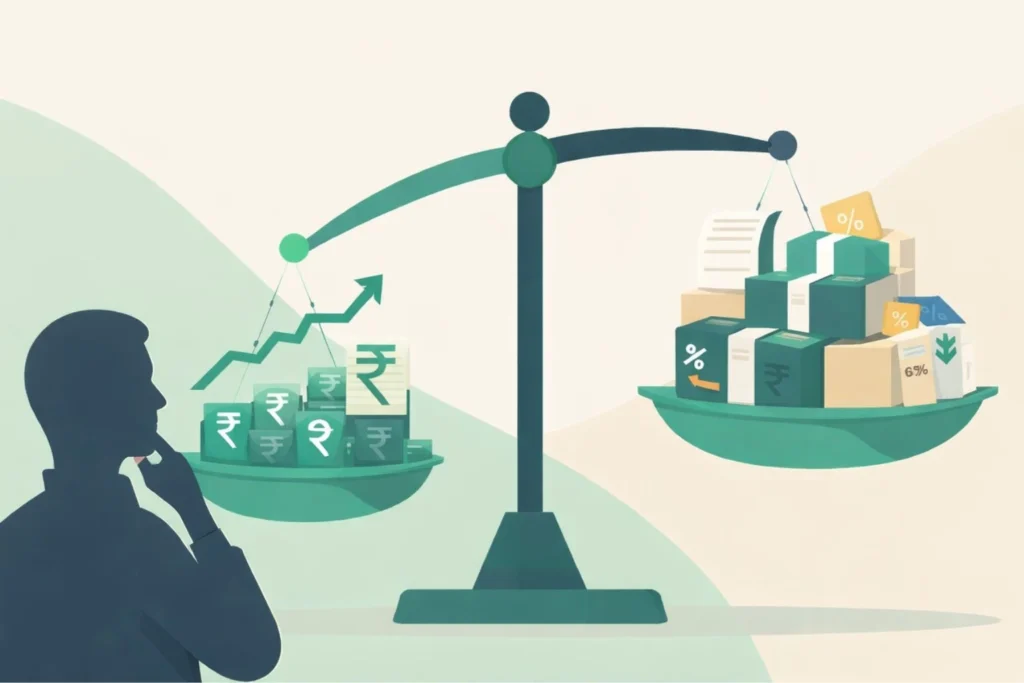
The truth is simple: a product does not fail because of one returned order. It fails when the RTO percentage quietly crosses the margin your product can survive.
Why RTO Confuses Most New E-commerce Sellers
For many beginners, an RTO order looks similar to a normal return. The order appears in the panel as “RTO,” the shipment eventually comes back, and the product returns to the seller’s inventory. At first glance, it may not seem like a serious issue.
However, an RTO order is operationally very different from a standard return.
An RTO usually begins when the courier attempts delivery, but the order cannot be completed. This may happen because the customer refuses a COD order, the address is incorrect, or the buyer is unavailable during delivery attempts.
After several failed attempts, the shipment is marked as Return to Origin (RTO) and begins its journey back through the courier network.
Instead of completing a successful delivery, the package now travels through multiple logistics hubs before returning to the seller.
For sellers on marketplaces like Meesho, Flipkart, and Amazon, this means the shipment has already consumed logistics resources without generating revenue.
This is why understanding the real mechanics of RTO is important before calculating how it affects profit.
The Real Cost Structure Behind a Single Order
When an order is placed, several operational costs are already activated before the product even leaves the warehouse. The seller prepares the product, packs it, labels it, and hands it over to the courier partner for delivery.
The first cost appears as forward shipping, which covers pickup, transportation through courier hubs, and delivery attempts at the customer’s address.
If the delivery fails and the order becomes RTO, the shipment begins its journey back. This reverse movement through the logistics network creates another shipping expense commonly known as return shipping or reverse logistics.
In addition to shipping, the seller has already used packaging materials such as courier bags, boxes, tape, and labels. These materials are consumed the moment the order is packed.
Because these expenses occur at different stages of the logistics process, beginners often see them separately and fail to connect them as part of the same RTO cost.
Why One RTO Often Cancels Profit from Multiple Successful Orders
A successfully delivered order generates revenue. After subtracting product cost, marketplace charges, and shipping fees, the remaining amount becomes the seller’s profit.
An RTO order works in the opposite direction.
Instead of generating revenue, the order consumes logistics resources twice. The shipment travels to the customer and then returns through the courier network without producing any sales.
Because of this, the cost of one RTO order can sometimes cancel out the profit earned from one or even two successful orders, depending on the product margin.
This is one reason many beginners feel confused when their sales look healthy but their overall profit begins shrinking.
Hidden Costs Most Sellers Never Calculate
Even when sellers understand the basic shipping charges involved in RTO, a few hidden factors are often overlooked.
Returned shipments sometimes arrive with damaged packaging or minor product wear. In some cases, the item may need repackaging before it can be sold again. Occasionally, products return in a condition that makes them difficult to resell.
There is also the time and operational effort involved in handling returned inventory. Orders must be received, inspected, restocked, and sometimes repackaged.
Individually, these costs may appear small. But when RTO begins occurring frequently, they quietly accumulate and begin affecting the overall profitability of a product.
This is why understanding what actually happens during an RTO order is the first step toward identifying when an RTO percentage starts becoming dangerous for a product.
Common Profit Calculation Mistakes That Hide the Real Impact of RTO
One reason many beginners struggle to understand RTO impact in e-commerce is that their profit calculation is often incomplete. The numbers may look correct on paper, but a few small assumptions quietly hide the real cost of returned orders.
In the beginning, sellers usually focus only on visible expenses such as product cost, marketplace commission, and forward shipping. If the remaining margin looks reasonable, the product appears profitable.
The problem is that RTO introduces additional costs that are not always considered during the initial calculation.
Many sellers estimate profit based only on delivered orders. They assume that occasional returns are a normal part of selling online and will not significantly affect the business. However, when the RTO percentage starts increasing, those overlooked costs begin to accumulate.
Over time, sellers notice that their sales volume may look healthy, yet the final profit continues shrinking.
This situation often creates confusion because the pricing calculation seemed correct in the beginning.
The issue is rarely the selling price itself. In most cases, it is the incomplete understanding of how RTO interacts with logistics expenses and product margin.
Understanding the common mistakes in profit calculation helps sellers see why a product that appears profitable on paper can slowly become unsustainable once RTO orders start increasing.
Ignoring Reverse Shipping and Handling Costs
One of the most common mistakes is assuming that RTO only affects the initial shipping charge. Many beginners calculate profit by subtracting the forward delivery cost, but forget that an undelivered order must travel back through the courier network.
When an order becomes Return to Origin (RTO), the shipment begins a reverse journey through sorting hubs and logistics centres before reaching the seller again. This movement creates return shipping, which is usually similar to the forward shipping cost.
Because this expense appears later in the order cycle, many sellers overlook it during their initial profit calculation.
Assuming All Returns Can Be Resold
Another common assumption is that a returned product can always be sold again without any additional cost.
In practice, this is not always true.
Returned shipments may arrive with damaged packaging or minor wear. Sometimes the product requires repackaging before it can be listed again. In certain cases, the condition of the item makes it difficult to resell at the same price.
These situations introduce additional costs that are rarely included in early profit calculations.
When these factors combine with repeated RTO orders, the real margin of a product can shrink much faster than beginners expect.
The Profit Math: When RTO Starts Destroying Your Margins
Understanding the RTO percentage alone is not enough to determine whether a product is safe to sell. What actually decides the outcome is the relationship between product margin and RTO frequency.
Many beginners hear general advice such as “15% RTO is normal in e-commerce.” While this may be true in some situations, the number by itself does not reveal whether a product is profitable or not.
The real answer comes from simple profit math.
Every successful order generates profit after deducting product cost, marketplace fees, and shipping charges.
However, an RTO order creates logistics cost without generating any revenue. The shipment travels to the customer and then returns through the courier network, consuming shipping resources twice.
Because of this, each RTO order quietly reduces the profit created by delivered orders.
For example, imagine a product that generates ₹120 profit when delivered successfully. If one RTO order costs around ₹120–₹150 in logistics and packaging, the loss from that single returned order can easily cancel out the profit earned from one successful sale.
When this pattern repeats across multiple orders, the RTO rate begins to determine whether the product remains profitable or slowly becomes unsustainable.
Understanding this relationship between margin and RTO is the key to identifying the point where a product becomes difficult to sustain.
How Profit per Order Determines Your RTO Tolerance
Not every product reacts the same way to RTO. The ability of a product to survive returns depends largely on the profit margin available on each successful order.
Products with higher margins can absorb occasional RTO orders without immediately turning unprofitable. However, when margins are small, even a moderate RTO rate can begin to erase profits quickly.
For example, if a seller earns ₹150 profit per delivered order but loses around ₹140–₹160 on each RTO shipment, the business can tolerate only a limited number of returned orders before the overall margin starts shrinking.
This is why experienced sellers evaluate RTO risk while deciding product pricing and category selection.
The Break-Even Point Where Profit Turns Into Loss
The break-even point appears when the profit from delivered orders becomes equal to the loss created by RTO shipments.
At this stage, the business is no longer generating real earnings even though orders continue to appear in the sales dashboard.
If the RTO percentage increases beyond this point, the product begins generating more logistics loss than revenue. This is the stage where many sellers start feeling that their business is busy but the profit is disappearing.
Why Low-Margin Products Collapse Much Faster
Low-margin products are the most vulnerable to RTO impact.
When the profit available per order is small, even a few returned shipments can quickly absorb the entire margin. This situation is common in highly competitive categories where sellers reduce prices aggressively to attract orders.
In such cases, a 10 – 15% RTO rate may already be enough to make the product difficult to sustain.
This is why experienced sellers rarely evaluate a product only by its selling price.
They also examine whether the available margin is strong enough to survive normal e-commerce return patterns.
A Practical Way to Estimate When Your Product Becomes Unsellable
Instead of relying only on general industry benchmarks, sellers often look at the relationship between profit per order and expected RTO loss.
If the cost of one RTO shipment is close to the profit from a delivered order, the product usually has very little tolerance for returns.
As RTO orders increase, the margin begins shrinking rapidly. Eventually, the business reaches a point where scaling the product only increases logistics expenses rather than generating profit.
This is usually the stage where sellers realise that the product has quietly crossed the unsellable zone.
Calculate the Real Impact of RTO on Your Product
Understanding the theory behind RTO percentage and profit margin is helpful, but the real clarity usually comes when sellers calculate the numbers using their own product data.
Many beginners try to estimate the impact mentally, but small differences in product cost, shipping charges, and marketplace fees can change the final result significantly.
This is why practical calculation becomes important.
Instead of relying only on assumptions, sellers can estimate how different RTO rates affect their profit using real numbers from their product listing.
To simplify this process, you can use MarginPanda’s RTO and Return Impact Calculator on MarginPanda.
By entering basic details such as selling price, product cost, shipping cost, and expected RTO percentage, sellers can quickly see how returns influence their overall margin and identify the point where a product becomes difficult to sustain.
Why the Same RTO % Can Be Safe for One Seller but Dangerous for Another
Many beginners assume that there is a universal acceptable RTO percentage in e-commerce. In practice, the same RTO rate can produce completely different results for different sellers. Several factors influence how much RTO a product can tolerate before profitability starts collapsing.
- Products with higher profit margins can absorb occasional RTO orders more comfortably. Low-margin products, however, can become unprofitable even with a moderate RTO rate.
- If shipping cost is a large percentage of the selling price, each RTO order consumes a bigger portion of the margin.
- Different fee structures on platforms like Meesho, Flipkart, and Amazon can change the profit left after a successful delivery.
- Categories such as fashion and impulse purchases often experience higher return patterns compared to utility products.
- Orders placed through COD tend to have higher refusal rates, increasing the likelihood of RTO.
- Products that require expensive packaging or protective material carry higher RTO losses.
- Items that frequently return damaged cannot always be resold easily, increasing the real loss per RTO order.
- Certain locations and pin codes show higher delivery failure rates, which can increase RTO frequency.
- Listings with fewer reviews or weaker credibility often face more order refusals compared to well-established listings.
- Highly competitive products with aggressive pricing often operate on thin margins, leaving very little room to absorb RTO losses.
Because of these factors, two sellers with the same RTO rate may experience very different outcomes. For one seller, the product may still be profitable, while for another it may already be approaching the unsellable zone.
How Marketplace Differences Change RTO Risk
Return patterns are not the same across all e-commerce platforms. The RTO rate in e-commerce can vary significantly depending on how customers shop, how orders are paid for, and how the marketplace operates.
Because of this, the same product may behave very differently on platforms like Meesho, Flipkart, and Amazon.
Understanding these differences helps sellers estimate how much RTO percentage their product may face before it starts affecting profitability.
| Marketplace | Typical Buying Behaviour | Expected RTO Risk | What Sellers Usually Notice |
| Meesho | Many orders are impulse purchases and heavily COD-driven | Higher RTO risk | Sellers often see higher RTO percentages, especially for low-price products |
| Flipkart | Mix of prepaid and COD buyers | Medium RTO risk | RTO varies depending on product category and delivery location |
| Amazon | Larger share of prepaid orders and stronger buyer commitment | Lower RTO risk | Orders usually have a higher completion rate compared to COD-heavy platforms |
This is why experienced sellers evaluate platform behaviour along with product margin before deciding where a product can scale safely.
Practical Signs Your Product Is Entering the “Unsellable Zone”
- When an order becomes Return to Origin (RTO), the shipment travels through the logistics network twice, which means the seller pays for both forward and return shipping.
- Unlike delivered orders, an RTO shipment generates logistics expenses but does not produce any sales.
- Forward shipping, reverse shipping, and handling charges together make up most of the RTO cost in e-commerce.
- Products with higher margins can survive a moderate RTO percentage, while low-margin products become unprofitable much faster.
- In many cases, the logistics cost of one RTO shipment is close to the profit earned from a delivered order.
- Even if sales numbers look healthy, repeated RTO orders can slowly reduce the overall margin of a product.
- Sellers often observe different return behaviour on platforms like Meesho, Flipkart, and Amazon.
- Cash on Delivery orders tend to have higher refusal rates compared to prepaid purchases.
- Tracking how often orders return helps sellers identify whether a product is still profitable or approaching the unsellable zone.
- Sellers can estimate how different RTO rates affect profit by using the RTO and Return Impact Calculator on MarginPanda, which makes it easier to see when a product may become difficult to sustain.
Key Takeaways Every Beginner Seller Should Understand About RTO
Many sellers do not immediately realise when a product is becoming difficult to sustain. The transition usually happens gradually. Orders continue to come in, the listing still looks active, and the sales dashboard may even show steady activity.
However, a few patterns appear that indicate the RTO percentage is starting to overpower the product margin.
One common sign is when sales volume looks healthy but the final profit remains unexpectedly low. Sellers often feel that the product should be generating more earnings, yet the numbers never match the expected margin.
Another signal appears when logistics charges begin increasing in settlement reports. As RTO orders accumulate, forward and return shipping costs quietly start absorbing the profit from delivered orders.
Some sellers also notice that increasing sales does not improve profitability. Instead of generating more earnings, higher order volume simply increases the number of returned shipments.
This is usually the stage where the product begins approaching the unsellable zone.
Recognising these signals early allows sellers to re-evaluate pricing, improve product listing clarity, or adjust their strategy before RTO losses grow larger.